
How to Charge an EV at Home Without a Garage: Complete Charging Guide
For many people considering an electric vehicle, one question comes up before making the purchase:
"Can I charge an EV at home if I don't have a garage?"
The answer is yes.
While having a private garage makes EV charging easier, it is not a requirement. Millions of EV owners charge their vehicles from apartments, driveways, shared parking spaces, and outdoor parking areas every day.
The key is choosing the right charging solution based on your living situation, parking environment, and available electrical supply.
In this guide, we will explain the best ways to charge an EV without a garage and how to choose between portable EV chargers and wall-mounted charging stations.
Can You Charge an EV Without a Garage?
A garage is convenient, but it is only one possible charging environment.
Before choosing a charger, consider three important questions:
- Where does your vehicle usually park overnight?
- Is there a power outlet near your parking space?
- Are you able to install permanent charging equipment?
Different situations require different charging solutions.
| Parking Situation | Recommended EV Charging Solution |
|---|---|
| Private driveway | Outdoor Wallbox Charger |
| Apartment parking space | Portable EV Charger or Wallbox |
| Rental property | Portable EV Charger |
| Outdoor parking area | Weather-resistant EV Charger |
Choosing the Right EV Charger Based on Your Living Situation
The best EV charging solution depends less on whether you have a garage and more on where you park your vehicle every day.
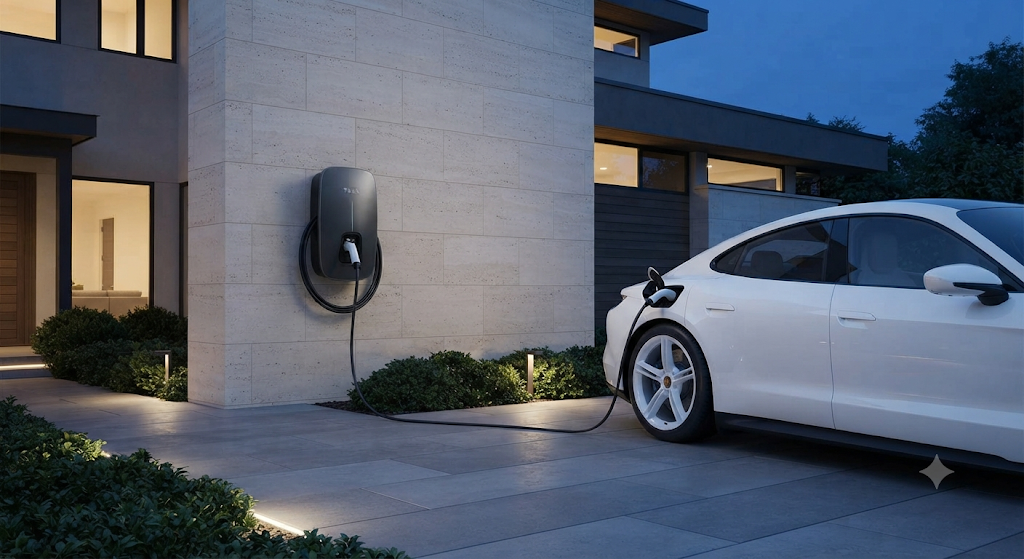
Scenario 1: You Have a Driveway but No Garage
Many homeowners park their vehicles on a driveway instead of inside a garage. This is actually one of the easiest situations for installing home EV charging.
A wall-mounted EV charger can provide:
- Faster charging speed
- Convenient daily charging
- Better cable management
- A cleaner permanent installation
However, outdoor installation requires attention to several factors.
Weather Protection
The charger should have sufficient protection against:
- Rain
- Dust
- Temperature changes
- Outdoor environments
A charger with an IP65 protection rating or higher is commonly preferred for outdoor applications.
Electrical Safety
Important safety features include:
- Overcurrent protection
- Leakage protection
- Ground fault detection
- Temperature monitoring
A properly installed outdoor EV charger can provide safe and reliable charging throughout the year.
Scenario 2: You Live in an Apartment or Condo
Apartment and condo owners often believe home EV charging is impossible. However, there are now several practical charging options depending on your parking situation and building regulations.
Option 1: Portable EV Charger
A portable EV charger is one of the most flexible solutions for apartment residents. It is especially suitable for users who:
- Rent their home
- Cannot modify the building
- Move frequently
- Need charging flexibility
Unlike a permanent wallbox installation, a portable charger can be taken with you when you move. It can also be used in different locations, such as:
- Home
- Workplace
- Vacation house
- Road trips
For apartment users, portability can be just as important as charging speed.
Option 2: Install a Wallbox Charger (If Allowed)
Some condominiums allow residents to install dedicated EV charging equipment. In this case, a wallbox charger can provide:
- Faster charging
- Better daily convenience
- Cleaner installation
- Smart charging features
This makes wallbox charging a practical option for long-term homeowners or residents with dedicated parking spaces.
Does a Portable EV Charger Always Mean Slow Charging?
One common misunderstanding about portable EV chargers is that they can only provide slow charging through a standard household outlet.
Many customers assume: "Portable chargers can only charge at 10A or 15A."
This is not always true.
The actual charging speed depends mainly on:
- The available electrical outlet
- The circuit capacity
- The charger's maximum current setting
- The vehicle's charging capability
A portable EV charger can achieve much higher charging speeds when connected to a suitable high-power outlet.
It is worth noting that if you use a CEE plug charger, the current it can supply can reach the maximum value. If you purchase a 7KW model, it can be charged at 32A. If you use a CEE adapter for charging, it depends on the situation. For example, if the maximum output current of the plug you choose is known, it will charge at that current.
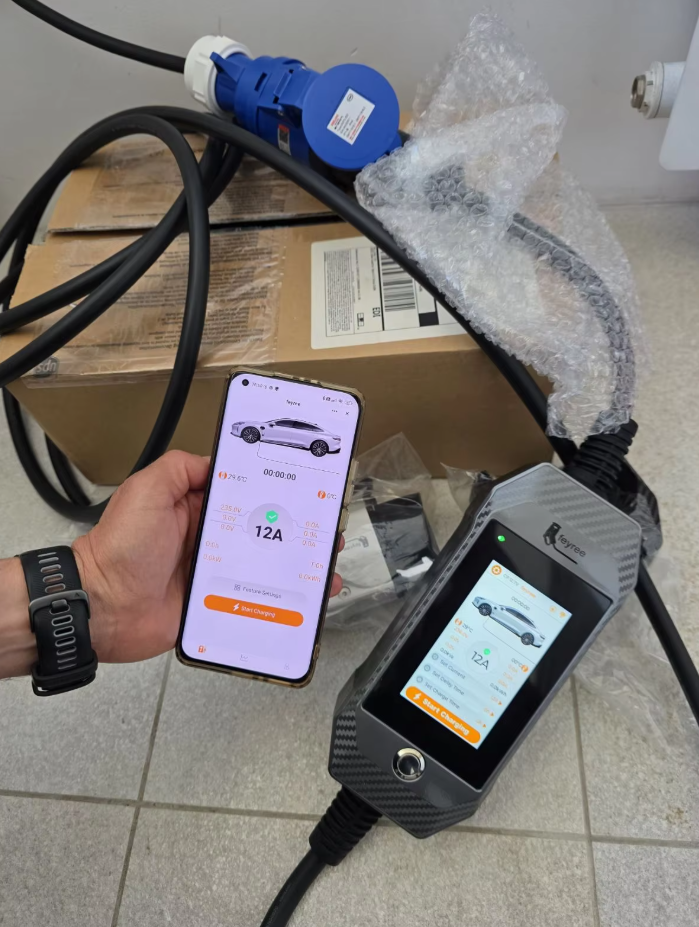
(This is a photo of the product feedback sent by the customer 7KW with CEE adapter)
Understanding EV Charger Plug Types and Charging Power
Different plugs support different charging currents. Choosing the right plug is an important step when purchasing a portable EV charger.
| Plug Type | Typical Current | Charging Application |
|---|---|---|
| Standard Household Plug | 10A–16A | Basic overnight charging |
| Blue CEE Plug | 16A / 32A | European residential charging |
| Red CEE Plug | Up to 32A | Three-phase charging |
| NEMA 14-50 | High-power residential charging | North American homes |
| Hardwired Connection | Maximum available power | Permanent installation |
Actual charging speed depends on local electrical regulations, wiring conditions, and vehicle limitations.
Why Plug Selection Matters for Portable EV Chargers
A portable charger is not limited to slow charging. The plug determines how much power can be delivered. For example:
- A standard household outlet may limit charging current for safety reasons.
- A Blue CEE 32A outlet can support much faster charging in many European homes.
- A NEMA 14-50 outlet is commonly used for Level 2 home charging in North America.
This means one portable EV charger can adapt to different charging environments by selecting the correct plug.
Electrical standards vary between countries, and choosing the correct plug is an important step before purchasing a portable EV charger.
If you are unsure which plug type matches your home outlet, check our detailed guide: EV Charger Plug Selection Guide
Our guide explains the differences between common plug types, including: Schuko, Blue CEE, Red CEE, UK Plug, NEMA 5-15, NEMA 14-50, and other regional standards. It helps you choose the right charger configuration based on your location and charging needs.
How to Choose the Right Portable EV Charger Before Buying
Before purchasing a portable charger, do not only look at the maximum charging power. Consider these questions:
1. What outlet do you have?
Check whether your home has:
- Standard household socket
- CEE outlet
- NEMA outlet
- Dedicated EV charging circuit
2. Can your electrical system support higher current charging?
A 32A charger does not automatically mean your car will charge at 32A. The final charging speed depends on:
- Home electrical capacity
- Circuit breaker rating
- Cable size
- Outlet specification
- Vehicle onboard charger
3. Do you need a charger for travel?
If you frequently:
- Travel
- Visit different locations
- Stay in holiday homes
A portable charger with multiple plug options provides much more flexibility.
Scenario 3: You Rent Your Home
For renters, permanent installation may not always be possible.
A portable EV charger is often the most practical choice because:
- No wall modification is required
- Installation is simple
- The charger can move with you
This makes portable charging especially attractive for people living in temporary housing.
Can You Leave an EV Charger Outside?
Many EV owners ask: "Can I charge my EV outdoors overnight?"
Yes, if the charger is designed for outdoor use.
Waterproof Protection
Choose chargers designed to withstand outdoor conditions. Look for:
- IP protection rating
- Weather-resistant housing
- Durable cables
Safety Features
A reliable EV charger should include:
- Overcurrent protection
- Leakage protection
- Overtemperature protection
- Ground protection
Cable Management
Proper cable storage helps prevent:
- Cable damage
- Water exposure
- Safety hazards
Portable EV Charger vs Wallbox Charger: Which One Should You Choose?
| Feature | Portable EV Charger | Wallbox Charger |
|---|---|---|
| Installation | Easy | Professional installation |
| Mobility | Excellent | Fixed location |
| Apartment suitability | Excellent | Depends on permission |
| Travel use | Excellent | Limited |
| Daily home charging | Good | Excellent |
Frequently Asked Questions
Can I charge an EV without a garage?
Yes. You can charge an EV using a portable charger, outdoor wallbox, or approved charging installation depending on your parking situation.
Are portable EV chargers slower than wallbox chargers?
Not necessarily. Charging speed depends on the plug type, electrical supply, and vehicle capability. A portable charger connected to a suitable high-power outlet can provide fast home charging.
Can I use a portable EV charger every day?
Yes. Many EV owners use portable chargers as their primary home charging solution.
What is the best EV charger for apartment living?
For renters or users without installation permission, portable EV chargers are usually the most flexible option. For residents with dedicated parking and installation approval, wallbox chargers provide a convenient long-term solution.
Conclusion
Not having a garage should not stop you from enjoying the benefits of electric vehicle ownership.
Whether you live in an apartment, rent your home, park on a driveway, or use outdoor parking, there is an EV charging solution that fits your needs.
The most important factors are:
- Your parking environment
- Available electrical supply
- Required charging flexibility
- Correct plug selection
With the right portable EV charger or wallbox solution, convenient home charging is possible almost anywhere.